

Top 7 Features Every Corporate Website Must Have in 2026
Home Top 7 Features Every Corporate Website Must Have in 2026
By Nibble Software
0 comments
November 16, 2026
Top 7 Features Every Corporate Website Must Have in 2026
A corporate website is more than an online presence. In 2026, it needs to communicate your brand, attract potential customers, provide a seamless user experience, and support business growth. From mobile-first design and website security to SEO and AI search readiness, the right features can help businesses build trust and generate more opportunities online.
Whether you are building a new corporate website or planning a redesign, understanding these essential features can help you make better development decisions.
In this guide, we will explore the top 7 features every corporate website must have in 2026, along with a practical checklist to help you evaluate your existing website.
Why Corporate Websites Need to Evolve in 2026
Business websites are changing rapidly as customer expectations, search technologies, and digital experiences continue to evolve.
A modern corporate website should help visitors quickly understand what your company offers, why they should trust your business, and how they can get in touch.
Today, businesses also need to consider:
- Mobile users who expect seamless browsing experiences.
- Search engines that rely on technical and content signals to understand websites.
- AI-powered search experiences that provide direct answers to users.
- Customers who expect secure and reliable online interactions.
- Marketing teams that need flexible tools to manage website content.
A successful corporate website combines design, technology, usability, and search visibility to support long-term business objectives.
Top 7 Features Every Corporate Website Must Have in 2026
1. Mobile-First and Responsive Website Design
Mobile-first design is one of the most important features of a modern corporate website.
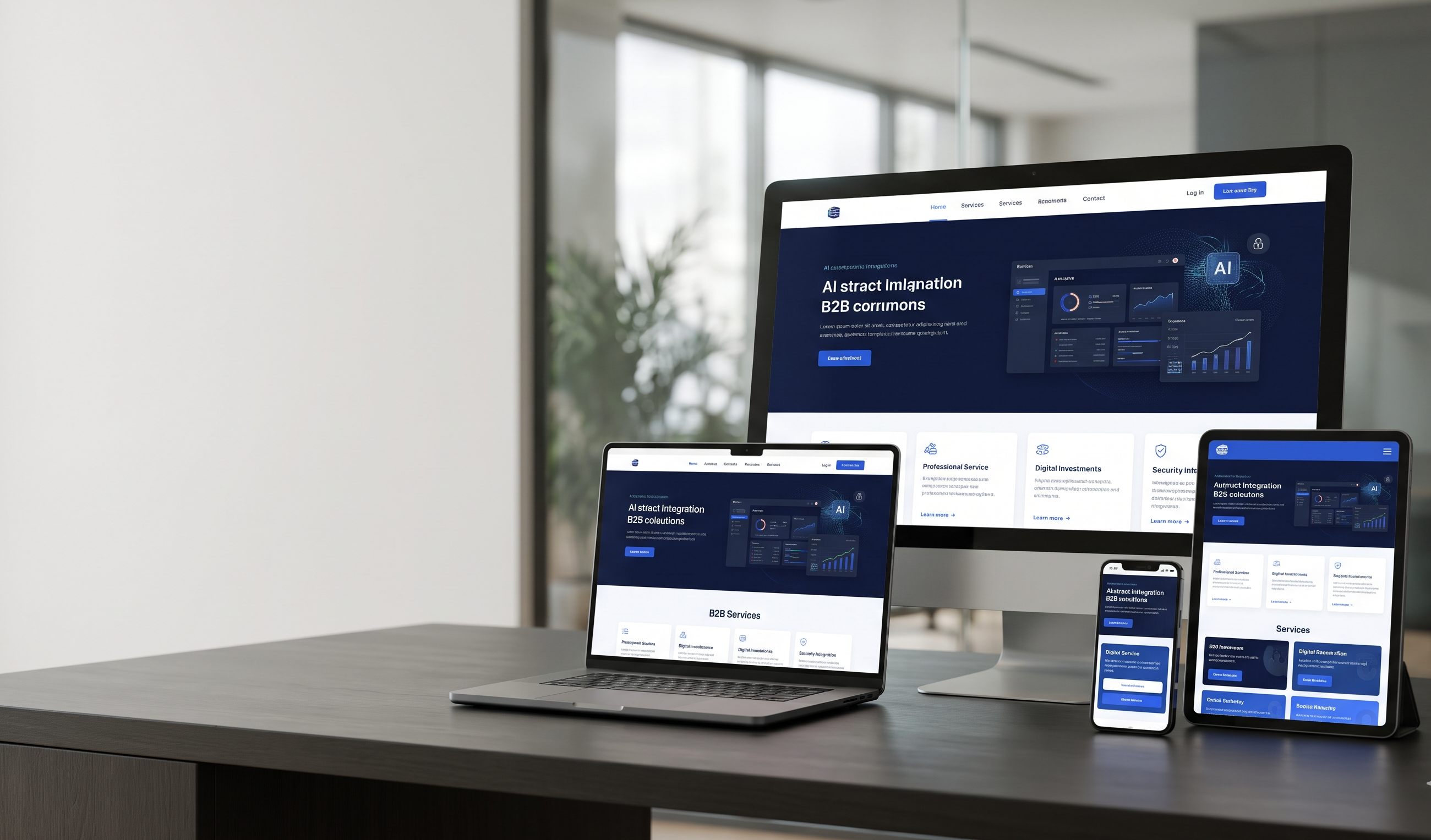
Customers may visit your website using smartphones, tablets, laptops, or desktop computers. Your website should provide a consistent experience across all these devices.
Responsive website design automatically adjusts layouts, images, navigation, and content according to the visitor’s screen size.
Why it matters:
- Provides a better user experience across devices.
- Makes navigation easier for mobile visitors.
- Supports mobile search visibility.
- Helps visitors access important information quickly.
- Creates a consistent brand experience.
What your website should include:
- Responsive layouts and flexible grids.
- Mobile-friendly navigation menus.
- Readable typography and appropriate spacing.
- Touch-friendly buttons and links.
- Optimized forms for smaller screens.
- Images that scale correctly without affecting layout stability.
For businesses investing in professional website design, mobile responsiveness should be included from the beginning rather than treated as an additional feature.
2. Fast Loading Speed and Core Web Vitals Optimization
Website performance directly affects how visitors interact with your business online.
A slow corporate website can frustrate users, increase abandonment, and make it harder for visitors to complete important actions such as submitting an inquiry or requesting a consultation.
Google’s Core Web Vitals provide useful performance measurements:
Metric | What It Measures | Good Target |
LCP | Loading performance | 2.5 seconds or less |
INP | Interaction responsiveness | 200 milliseconds or less |
CLS | Visual stability | 0.1 or less |
These thresholds are evaluated at the 75th percentile of real user visits. Source: Google Web Vitals
How to improve corporate website performance:
- Compress images and use modern image formats.
- Reduce unnecessary JavaScript and CSS.
- Enable browser caching.
- Use reliable hosting infrastructure.
- Minimize unnecessary third-party scripts.
- Optimize fonts and above-the-fold content.
- Monitor performance using Google PageSpeed Insights.
Website speed optimization should be part of the development process, not something added after the website goes live.
3. SEO-Friendly Website Architecture
A visually attractive website is not enough if potential customers cannot discover it through search engines.
SEO-friendly website architecture helps search engines understand your website’s pages, services, and relationships between different sections.
A well-structured corporate website should include:
- Clear navigation and logical page hierarchy.
- SEO-friendly URLs.
- Unique meta titles and descriptions.
- Proper H1, H2, and H3 heading structure.
- XML sitemap and robots.txt configuration.
- Canonical tags.
- Internal linking between relevant pages.
- Structured data where appropriate.
- Indexable content and accessible page resources.
For example, a software development company should have dedicated service pages for website development, PHP development, CMS development, and web portal development instead of placing every service on a single page.
This helps users find relevant information and gives search engines clearer signals about the website’s content.
SEO should be considered during website planning, design, and development—not only after launch.
4. Strong Website Security and Data Protection
Website security is essential for every corporate business, especially companies that collect customer information through contact forms, registration pages, or business portals.
A secure website helps protect business information, customer data, and brand reputation.
Essential corporate website security features include:
- HTTPS with a valid SSL/TLS certificate.
- Secure authentication and password policies.
- Regular CMS, plugin, and framework updates.
- Automated backups and recovery procedures.
- Protection against common web vulnerabilities.
- Spam protection for contact forms.
- Access controls for website administrators.
- Security monitoring and vulnerability testing.
Businesses using PHP development or custom web portals should also consider secure coding practices, input validation, and appropriate authorization controls.
Security requirements depend on the website’s functionality, the data it handles, and applicable regulations.
A corporate website should also provide clear privacy information and appropriate consent mechanisms wherever required.
5. Flexible CMS for Easy Website Management
A Content Management System (CMS) allows businesses to create, update, and manage website content without requiring developers for every small change.
For corporate websites, a flexible CMS can improve efficiency and help marketing teams respond quickly to business needs.
Important CMS features include:
- Easy content editing.
- Custom page templates.
- Role-based user permissions.
- Media and image management.
- SEO settings for individual pages.
- Blog and news publishing functionality.
- Version history and content revisions.
- Integration with marketing tools.
- Scalability for future website expansion.
Businesses looking for customized content management solutions can explore our CMS development services to build a website management system aligned with their requirements.
The right CMS depends on your website’s complexity, budget, security requirements, and future growth plans.
For businesses with complex workflows, custom PHP development or a tailored CMS may provide greater flexibility than a standard platform.
The objective is to choose a CMS that supports your team today while allowing your website to grow in the future.
6. AI Search Readiness and Structured Content
Search behavior is evolving as users increasingly discover information through AI-powered search experiences.
Corporate websites should be structured so their information is clear, accessible, and easy for search engines and AI systems to interpret.
AI search readiness does not mean adding a special AI plugin or relying on a single technical file. It involves creating a technically sound website with useful, well-organized information.
Important AI search readiness practices:
- Publish original and helpful content.
- Use descriptive headings and clear page structures.
- Answer relevant customer questions directly.
- Maintain accurate company and service information.
- Use appropriate structured data.
- Keep important content accessible in crawlable HTML.
- Strengthen internal linking between related pages.
- Maintain technical SEO fundamentals.
- Monitor search visibility and traffic from relevant platforms.
For example, a corporate website development page should clearly explain the services offered, development process, technologies used, and types of businesses served.
This makes the information easier for potential customers to understand and easier for search systems to interpret.
AI search visibility is not guaranteed by any single optimization. Strong content, accessibility, technical SEO, and useful information remain important foundations.
7. Conversion-Focused Design with Clear CTAs
A corporate website should do more than attract visitors. It should encourage them to take meaningful actions.
These actions may include:
- Requesting a consultation.
- Submitting a contact form.
- Requesting a project quotation.
- Downloading a company brochure.
- Booking a product demonstration.
- Calling the business.
- Exploring a particular service.
Clear Calls to Action (CTAs) help visitors understand what to do next.
Examples of effective corporate website CTAs:
- Get a Free Consultation
- Request a Project Quote
- Discuss Your Project
- Explore Our Services
- Contact Our Team
- Schedule a Demo
CTAs should be visible, relevant, and positioned where users naturally need them.
Additional conversion-focused features:
- Short and user-friendly contact forms.
- Testimonials and customer reviews.
- Case studies and project portfolios.
- Clear service descriptions.
- Trust badges and certifications where applicable.
- Multiple contact options.
- CRM integration for lead management.
A well-designed conversion journey can turn your corporate website into a valuable business development tool.

Corporate Website Development Checklist for 2026
Before launching a new corporate website or redesigning an existing one, use this checklist to review its essential features.
Feature | Checklist Item | Status |
Responsive Design | Website works across mobile, tablet, and desktop | ☐ |
Website Speed | Core Web Vitals are monitored and optimized | ☐ |
Technical SEO | Sitemap, robots.txt, canonical tags, and metadata are configured | ☐ |
Website Security | HTTPS, backups, and security updates are implemented | ☐ |
CMS | Content can be managed efficiently | ☐ |
AI Search Readiness | Content is clear, accessible, and well structured | ☐ |
Conversion Optimization | CTAs, contact forms, and lead generation paths are available | ☐ |
Accessibility | Keyboard navigation, contrast, and accessible labels are reviewed | ☐ |
Analytics | GA4 or another suitable analytics platform is configured | ☐ |
Testing | Forms, links, navigation, and key functionality are tested | ☐ |
Pro Tip: Do not treat website launch as the final step. Regular performance monitoring, security updates, SEO improvements, and content updates are important for maintaining a successful corporate website.
How to Choose the Right Corporate Website Development Company?
Choosing the right website development partner can significantly influence the success of your corporate website.
Before selecting a development company, evaluate the following factors.
Technical Expertise
Look for a company with experience in modern web technologies, CMS platforms, PHP development, and custom website solutions.
SEO-Friendly Development
Your development partner should understand technical SEO, website architecture, indexing, page speed, and search engine accessibility.
Design and User Experience
Review previous projects to understand the company’s ability to create professional, user-friendly, and responsive websites.
Scalability
Choose a development approach that supports future business requirements, additional pages, integrations, and functionality.
Support and Maintenance
Ask about post-launch support, security updates, backups, performance monitoring, and ongoing maintenance.
The right development partner should understand your business objectives rather than simply deliver a visually attractive website.
When Should a Business Redesign Its Corporate Website?
A website redesign may be necessary when your existing website no longer supports your business goals.
Consider redesigning your website if:
- Your website looks outdated.
- It does not work properly on mobile devices.
- Website loading speed is consistently poor.
- Your business services or positioning have changed.
- Visitors struggle to find important information.
- Your website generates very few inquiries.
- The CMS is difficult to manage.
- Your website has security or technical limitations.
- Your website architecture is preventing SEO growth.
A redesign should begin with an audit of the existing website to identify technical issues, SEO risks, usability problems, and opportunities for improvement.
Conclusion: Build a Corporate Website That Supports Business Growth
A successful corporate website in 2026 requires more than modern visuals. It needs responsive design, strong performance, SEO-friendly architecture, security, CMS flexibility, AI search readiness, and conversion-focused functionality.
By prioritizing these seven essential features, businesses can create websites that provide better user experiences, support online visibility, and help generate valuable business opportunities.
Whether you are launching a new website or upgrading an existing one, investing in the right website design and development strategy can support your long-term digital growth.
Build Your Corporate Website with Nibble Software
Looking to build a modern, scalable, and SEO-friendly corporate website?
Nibble Software helps businesses develop professional digital experiences with website design, CMS development, PHP development, and custom web portal solutions.
Our goal is to help businesses build websites that combine functionality, usability, and technology to support their business objectives.
Ready to upgrade your corporate website? Contact Nibble Software to discuss your website design and development requirements.
Get To Know Us
Frequently Asked Questions (FAQs)
1. What features should every corporate website have in 2026?
Every corporate website should include responsive design, fast loading speed, SEO-friendly architecture, website security, a flexible CMS, AI search readiness, and clear conversion-focused CTAs
2. How much does corporate website development cost?
Corporate website development costs depend on design complexity, number of pages, CMS requirements, custom functionality, integrations, and security needs. A simple corporate website generally costs less than a custom enterprise website or web portal.
Businesses should define their requirements before requesting a development quotation.
3. Which CMS is best for a corporate website?
WordPress is a popular option for many corporate websites because of its flexibility and content management capabilities. Drupal and custom CMS solutions may be suitable for businesses with more complex requirements.
The best CMS depends on your business goals, technical requirements, and future scalability.
4. How often should a corporate website be redesigned?
There is no fixed redesign timeline for every business. A corporate website should be reviewed regularly and redesigned when its performance, design, technology, or functionality no longer meets business requirements.
5. Why is SEO important during corporate website development?
SEO during development helps establish a strong technical foundation for search visibility. It includes website architecture, crawlability, indexing, metadata, internal linking, and mobile performance.
Planning SEO from the beginning can help avoid expensive corrections after launch.
6. What is the difference between corporate web design and web development?
Corporate web design focuses on the website’s appearance, layout, user experience, and visual identity.
Web development focuses on implementing the design and building functionality using technologies such as HTML, CSS, JavaScript, PHP, CMS platforms, and databases.
Both are essential for creating an effective corporate website.