

How CRM Software Helps Businesses Manage Leads and Increase Sales
Home How CRM Software Helps Businesses Manage Leads and Increase Sales
By Nibble Software
0 comments
September 17, 2026
How CRM Software Helps Businesses Manage Leads and Increase Sales
In today’s competitive business environment, managing leads, tracking customer interactions and following up on sales opportunities can quickly become overwhelming. Many businesses still rely on spreadsheets, emails and manual processes to manage customer information, which often leads to missed opportunities and lost revenue.
This is where CRM software for businesses becomes essential. A Customer Relationship Management (CRM) system helps businesses organize customer data, streamline sales processes, automate follow-ups and improve team collaboration. Whether you’re a small business or a growing enterprise, the right CRM software can help you manage leads more effectively and increase sales.
What Is CRM Software?
CRM (Customer Relationship Management) software is a business tool designed to help companies manage interactions with prospects and customers throughout the sales journey.
A CRM system acts as a centralized database where businesses can store and access:
- Customer contact information
- Lead details
- Communication history
- Sales activities
- Follow-up schedules
- Customer support records
Instead of managing customer information across multiple spreadsheets and platforms, CRM software keeps everything organized in one place.
Why Businesses Need CRM Software
As a business grows, managing customer relationships manually becomes increasingly difficult. Without a structured system, businesses often face challenges such as:
- Losing track of potential leads
- Missing important follow-ups
- Inconsistent customer communication
- Limited visibility into sales performance
- Inefficient collaboration between teams
CRM software addresses these challenges by creating a more organized and efficient sales process.
How CRM Software Helps Manage Leads
Centralized Lead Management
One of the biggest advantages of CRM software is having all lead information stored in a single location.
Sales teams can easily access details such as:
- Contact information
- Lead source
- Previous conversations
- Purchase interests
- Follow-up activities
This ensures that no valuable lead is overlooked.
Lead Tracking and Qualification
Not every lead is ready to make a purchase immediately. CRM software helps businesses track where prospects are in the sales funnel and identify which leads are most likely to convert.
By assigning lead scores and tracking engagement, businesses can focus their efforts on high-potential opportunities.
Automated Lead Assignment
For businesses with multiple sales representatives, CRM software can automatically assign leads based on territory, expertise, or availability.
This speeds up response times and ensures leads are handled by the right team members.
How CRM Software Increases Sales
Better Sales Pipeline Management
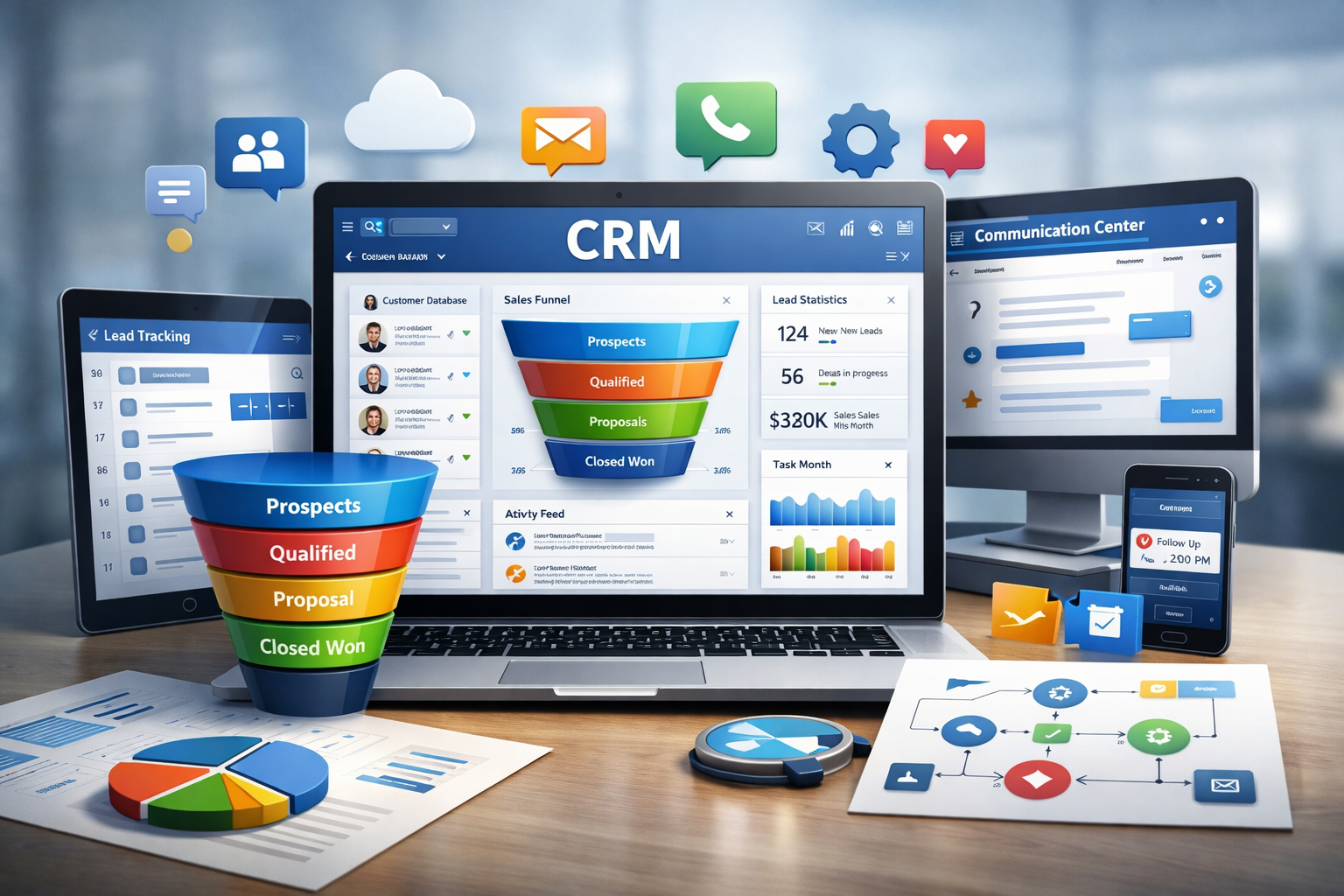
A CRM system provides a clear view of the entire sales pipeline.
Sales teams can monitor:
- New inquiries
- Qualified leads
- Ongoing negotiations
- Closed deals
This visibility helps businesses identify bottlenecks and improve sales performance.
Automated Follow-Ups
Many sales opportunities are lost simply because follow-ups are delayed or forgotten.
CRM software automates reminders, tasks and email sequences, ensuring that prospects receive timely communication throughout the buying journey.
Consistent follow-ups can significantly improve conversion rates.
Improved Sales Forecasting
CRM software collects valuable sales data that can be used to forecast future revenue and identify trends.
Business owners and managers can make informed decisions based on real-time insights rather than assumptions.
Faster Response Times
Customers expect quick responses when they inquire about products or services.
With CRM software, sales representatives can instantly access customer information and communication history, allowing them to respond more efficiently and professionally.
Improving Customer Relationships Through CRM
Building long-term customer relationships is just as important as acquiring new customers.
CRM software helps businesses maintain stronger relationships by:
- Tracking customer interactions
- Recording purchase history
- Personalizing communication
- Managing support requests
- Monitoring customer satisfaction
When businesses understand their customers better, they can deliver more personalized experiences that encourage loyalty and repeat purchases.
Key Features to Look for in CRM Software
Choosing the right CRM solution starts with understanding the features your business needs.
Important CRM features include:
- Contact Management – Store and organize customer information in a centralized database.
- Lead Tracking – Monitor lead status and movement through the sales funnel.
- Sales Pipeline Management –Visualize and manage every stage of the sales process.
- Task Automation –Automate reminders, follow-ups and routine administrative tasks.
- Email Integration – Connect email platforms to track communication history.
- Reporting and Analytics – Measure sales performance and customer engagement.
- Mobile Accessibility –Access customer information from anywhere using mobile devices.
- Team Collaboration Tools – Improve communication between sales, marketing and customer support teams.
CRM Software for Small and Growing Businesses
Many small businesses assume CRM software is only for large organizations. However, CRM solutions provide significant benefits for businesses of all sizes.
For small businesses, CRM software helps establish organized processes from the beginning. For growing businesses, it provides the scalability needed to manage larger customer databases, more sales opportunities and increasing team collaboration.
As customer expectations continue to rise, investing in CRM software becomes a strategic advantage.
Choosing the Right CRM Solution
When selecting CRM software for your business, consider factors such as:
- Ease of use
- Customization options
- Integration capabilities
- Scalability
- Security features
- Customer support
- Pricing structure
The ideal CRM system should align with your current business needs while supporting future growth.
Why Choose Nibble Software for CRM Development?
At Nibble Software, we develop custom CRM solutions tailored to your business processes and goals. Our CRM systems help businesses streamline lead management, automate follow-ups, improve sales performance and strengthen customer relationships.
Whether you need a CRM for sales tracking, customer management, or business automation, our team can build a scalable solution that grows with your business.
Conclusion
Managing leads, tracking sales opportunities and maintaining customer relationships are critical components of business success. However, relying on manual processes often leads to inefficiencies and missed opportunities.
CRM software for businesses provides a centralized platform for managing customer interactions, automating workflows and improving sales performance. From lead tracking and follow-up automation to customer retention and business insights, CRM systems help businesses operate more efficiently and grow sustainably.
For businesses looking to improve lead management, increase sales and deliver better customer experiences, investing in CRM software is a smart step toward long-term success.